Is Wan 3.0 open source?
No — and here is what shipped instead
No. Alibaba publishes Wan 3.0 as an API and nothing else — wan3.0-video and wan3.0-video-prime, metered by the second. There is no checkpoint on Hugging Face, no weights repository on GitHub, and no licence that lets you self-host it. The open line stops at Wan 2.2.
If you came here to download something for your own card, the next two minutes will save you an afternoon. If you came because you want to use the model regardless, the box below is the real one, and the first clip is free.
 12s · 16:9 · 720P
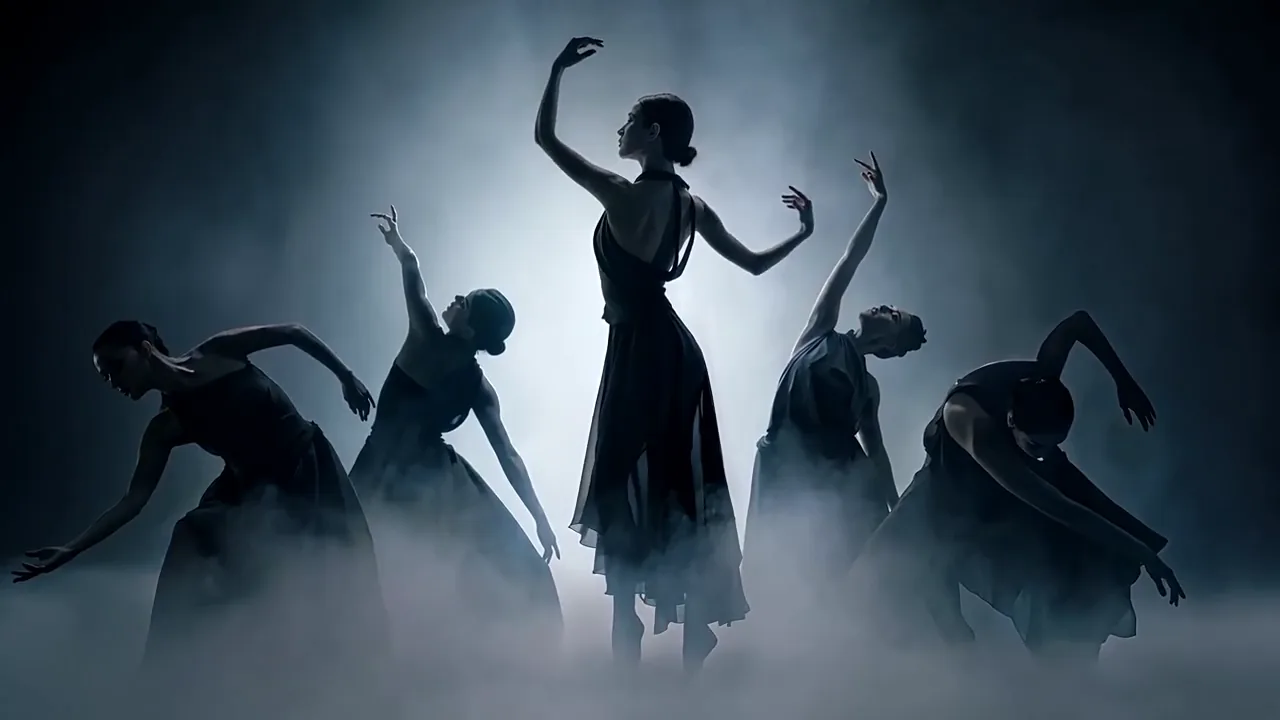
Dancers in backlit fog
Three different things get called open, and Wan 3.0 is none of them
"Is it open source" is really three questions, and most pages answer one and imply the rest. Are the weights published — the file you load onto your own card. Is the code published — the inference and training repo. Is there a licence — permission to run it yourself and sell what comes out. For Wan 2.2 all three were yes. For Wan 3.0 all three are no, and no announcement has said otherwise.
That matters more than a label, because the three fail in different ways. No licence means self-hosting is not a technical problem you can solve with a bigger card — there is nothing to license. And the practical consequence is narrower than it sounds: you lose the ability to run it offline, not the right to sell the output. Commercial use travels with the API, which is why the one thing you genuinely cannot do is the one thing most people came here for. The full Wan 3.0 specification, row by row.
- Published Wan 3.0 checkpoints
- 0
- Model IDs, both API-only
- 2
- The last release with weights
- Wan 2.2
- That release's licence, still valid
- Apache 2.0
- What the closed one costs to run
- $0.05/s
Published Wan 3.0 checkpoints
Model IDs, both API-only
The last release with weights
That release's licence, still valid
What the closed one costs to run
- No Hugging Face checkpoint
- No GitHub weights repository
- No self-hosting licence
- No quantised or distilled build
- No announced plan to publish either
The Wan 3.0 open source question, answered row by row
Every row below links to the primary page it came from, so none of it has to be taken on trust. Four of these rows are the ones third-party guides get wrong most often — they are marked, with what the documentation says instead.
Source= links to the primary page
- Open weights
None published
Guides describing 1.3B or 14B Wan 3.0 checkpoints, download mirrors or VRAM thresholds are describing something that has not been released. There is no publication date to wait for either — none has been announced, and ((the dates that do exist|/wan-3-0-release-date)) are all about API availability.
Model Studio- Apache 2.0
Not Wan 3.0
Apache 2.0 is real, and it covers Wan 2.2. It has been carried forward onto 3.0 by pages written before Wan 3.0 existed. Nothing in the 3.0 release notes mentions a licence of any kind.
Wan-AI on Hugging Face- Hugging Face
The
Wan-AIorg is genuine and hosts the Wan 2.x line — no 3.0 weights are in it Wan-AI on Hugging Face- GitHub
The official org is
Wan-Video. It carries code for the open Wan 2.x releases and no Wan 3.0 checkpoint Wan-Video on GitHub- "Official" repos elsewhere
Treat as unverified
The three places this model family is published from are GitHub `Wan-Video`, Hugging Face `Wan-AI` and ModelScope. A repository outside those three that calls itself the official Wan 3.0 source is not, however official the org name reads — and one such repo, carrying no weight files at all, has been circulating since September.
Wan-Video on GitHub- ComfyUI
Supported — but as API nodes
ComfyUI has shipped native Wan 3.0 nodes since v0.33.4, and Comfy publishes official workflow templates. They submit your job to Alibaba with your key and fetch the result. You can drive Wan 3.0 from a Comfy graph; you cannot run it on your own hardware. Both halves are true and either one alone misleads.
ComfyUI docs- Commercial use of output
Permitted under Alibaba's usage policy, closed weights notwithstanding
Model Studio- Cost to run the closed model
$0.05 · $0.10 · $0.20 per generated second at 480P / 720P / 1080P
Alibaba Cloud
Why so many pages say Apache 2.0, and why the date on a page matters here
Most of the "Wan 3.0 is open source" writing was published before Wan 3.0 existed. In July 2025 the newest Wan was 2.2, it genuinely was Apache 2.0, and Alibaba genuinely had a run of open releases behind it — so "Wan is open source" was a fair thing to write. Wan 2.5 ended that run quietly, with no announcement to pick up, and the sentence survived into pages about a model it had stopped describing. This is why a page without a visible date is not much use on this question. The claim was true, then it was not, and nothing marked the moment in between.
Checked by Hao Lin against the pages linked above on 14 September 2026. These are negative claims — "there is no X" ages faster than "there is an X" — so this table is re-checked weekly and the date moves when it does. Found a row that has gone stale? Tell us.
You cannot download it — so here is the receipt for the one that just ran
- model
- wan3.0-video
- resolution
- 848×480
- length
- 5.0s
- frame rate
- 30 fps
- audio
- on
- task
- 0385dc79…
See the raw response
This is the JSON Alibaba's API returned, untouched. When the weights are closed, the model ID on the receipt is the only thing standing between you and a site that quietly runs an older, cheaper Wan under a newer name — so it is printed on every clip rather than kept on a status page.
Served through Alibaba Cloud Model Studio. wan-3.run is an independent interface — we are not Alibaba, and we say so because a closed model makes that distinction easy to blur.
The Wan you can download, against the one you cannot
Wan 2.2 is not a consolation prize — it is a permissive, genuinely open release that still runs, still has no revenue cap, and on the 5B build fits in 8 GB of VRAM after quantisation. It is also two generations behind on the things Wan 3.0 was built for. Pick on what your work needs, not on the licence badge.
Weights
- Wan 2.2 (open)
- Published, Apache 2.0
- Wan 3.0 (closed)
- None
Released
- Wan 2.2 (open)
- 28 Jul 2025
- Wan 3.0 (closed)
- GA 24 Aug 2026
Runs offline
- Wan 2.2 (open)
- Yes, on your own card
- Wan 3.0 (closed)
- No
Entry VRAM
- Wan 2.2 (open)
- ≈8 GB, TI2V-5B quantised
- Wan 3.0 (closed)
- None — nothing runs locally
Native audio
- Wan 2.2 (open)
- No
- Wan 3.0 (closed)
- Yes, same pass
Max single pass
- Wan 2.2 (open)
- 5s typical
- Wan 3.0 (closed)
- 2–30s
Lowest tier
- Wan 2.2 (open)
- 720P
- Wan 3.0 (closed)
- 480P
Document / webpage input
- Wan 2.2 (open)
- No
- Wan 3.0 (closed)
- Yes
Ongoing cost
- Wan 2.2 (open)
- Your electricity and your card
- Wan 3.0 (closed)
- $0.05–$0.20 per generated second
Rights over output
- Wan 2.2 (open)
- No revenue cap, no field limits
- Wan 3.0 (closed)
- Commercial use on paid plans
The trap in "open is cheaper"
Open weights remove the licence fee, not the GPU bill — and once you price the GPU, the arithmetic often inverts. A hosted Wan2.2-T2V-A14B clip sells for around $0.29 for five seconds at one well-known inference provider. Five seconds of the closed Wan 3.0 at 480P, with sound, costs $0.25. The open model is the more expensive one to rent, and the newer one is not the premium option — it is the one with a draft tier. Self-hosting only wins once your own card is already bought, already idle, and already paid for. What a Wan 3.0 clip actually costs, worked through.
Wan 2.2 model IDs, for the search you are about to run: Wan2.2-T2V-A14B, Wan2.2-I2V-A14B, Wan2.2-TI2V-5B, Wan2.2-S2V-14B, Wan2.2-Animate-14B. The 5B build is the one that fits a consumer card.
Five ways to tell whether a site is really running Wan 3.0
Closed weights create a problem the open era did not have: you cannot inspect what you are being sold. Anyone can put "Wan 3.0" on a landing page and route the request to something cheaper, and at least one interface ranking on the first page for this model says in its own pricing FAQ that it runs on the Wan 2.7 engine. None of these checks needs an account, and all five work on any site.
The page advertises 4K
Wan 3.0 tops out at 1080P. There is no 4K tier and no way to request one through the API
Anything labelled 4K is an upscaler running after generation — a bigger file, not more detail. Ask what the upstream resolution was
Check the spec page firstNo model ID appears anywhere on a finished clip
The API returns the model ID in the response. A site that does not print it has chosen not to, and the reason is rarely flattering
Ask to see the raw response for one clip. It is one field, and there is no cost to showing it
Printed on every clip hereMaximum length is 15 seconds, or five
Wan 3.0 does 2–30 seconds in one pass. Fifteen is the ceiling on reference video input, and five is roughly where the previous generation sat
Ask for thirty seconds in one generation. An older engine cannot produce it, whatever the label says
2–30s, any whole numberThe clip comes back silent
Wan 3.0 writes the soundtrack in the same pass as the picture, and switching it off does not change the price. Silence usually means an older model with audio bolted on afterwards
Generate a shot with a specific sound in the prompt and listen to whether it lands on the action
Sound in the same pass"Free and unlimited, no watermark, forever"
Alibaba meters this model per second of output from the first second. Nobody is absorbing an unlimited bill, so something else is happening — an older model, a queue that never clears, or a limit that appears after signup
Find the per-clip or per-second number before you invest a prompt in it. A provider that will not say is telling you something
One free clip, then metered
These checks are worth running on this site too, which is the point of printing the receipt above. Our answer to all five is on the page rather than in a support reply — and if one of them ever stops being true here, it will be because we broke something, not because we quietly changed engines.
Three real routes to the closed model, and how to choose
There is no download, so the only remaining question is whose infrastructure you use. All three of these are legitimate — they differ in what they ask of you before the first clip, not in which model they reach.
01
Alibaba Cloud Model Studio — the source
The first-party route, billed at $0.05 / $0.10 / $0.20 per generated second. It wants a cloud account, a workspace and a region that matches your key, and the new-account free quota is one-off and Beijing-only. Right answer if you are building a product on it.
02
An inference platform — if you are writing code anyway
fal, Atlas Cloud, OpenRouter and others resell the same model behind their own SDKs. Worth it when you already run several models through one billing relationship and want one more. You are paying a margin for that convenience.
03
Here — if you want to see it work before any of that
No cloud account, no key, no region to get wrong. Your first clip is free — 480P, up to three seconds, with sound, on the real
wan3.0-video. An email, no card. When you want thirty seconds at 1080P, plans start at $12.90 a month billed yearly, and a failed run never costs a credit.
All three reach the same weights, so the only real question is how much has to happen before your first clip does. Routes one and two ask for a cloud account, a key and a region that matches it — worth doing once you know the model earns its place in your work. This is the route that lets you find that out first, with your own shot rather than someone's showreel.
Wan 3.0 open source questions
Will Wan 3 be open-source?
Where are the Wan 3.0 weights on Hugging Face?
Wan-AI organisation is genuine and hosts the Wan 2.x line, but it holds no Wan 3.0 checkpoint. If a guide links you to a 1.3B or 14B Wan 3.0 download, check what the link actually resolves to — the published locations for this family are GitHub Wan-Video, Hugging Face Wan-AI and ModelScope, and repositories outside those three claiming to be official are not.Is Wan made by Alibaba?
wan3.0-video and wan3.0-video-prime. This site is an independent interface to that API and is not affiliated with Alibaba.Can I run Wan 3.0 in ComfyUI?
Which Wan version is best if I need open weights?
Wan2.2-TI2V-5B runs in about 8 GB of VRAM once quantised. What you give up against 3.0 is native audio, the 30-second single pass, the 480P draft tier and document input. If the version you are weighing is the one in between, Wan 3.0 against Wan 2.7 has the generation-by-generation table.If Wan 3.0 is closed, can I still sell what I make with it?
Is Wan 3.0 completely free anywhere?
Is self-hosting Wan 2.2 cheaper than paying for Wan 3.0?
Wan2.2-T2V-A14B five-second clip runs about $0.29 at one major inference provider, against $0.25 for five seconds of Wan 3.0 at 480P with sound. Apache 2.0 waives the licence fee, never the hardware.Written and maintained by the wan-3.run editorial teamPublished Last updated Tool version 2026.09.4